Wednesday, 12 October 2011

31 Million Americans Skip Breakfast Each Day

Skip BreakfastIf you Google the term "skip breakfast," more than 10 million results turn up, often with information about how eating breakfast is crucial to maintain a healthy lifestyle. Everyone may know that breakfast is the most important meal of the day, but that doesn't mean that they're all scrambling eggs and toasting bread. A recent survey by the NPD Group found that 31 million Americans, about 10 percent of the U.S. population, do not eat breakfast.
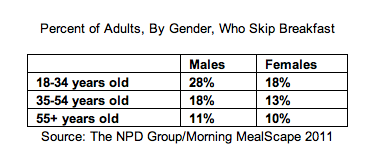
The Morning MealScape 2011 study surveyed 27,179 Americans from January 10 through March 7, 2011. The results indicated that males ages 18-34 are most likely to skip breakfast (28 percent) and females ages 55 and older were the most likely to eat a morning meal; only 10 percent reported skipping breakfast. Among children, skipping breakfast correlates with age -- teenagers are more likely to not eat breakfast than younger children. See the chart below for more statistics:
2011-10-11-Screenshot20111011at11.32.47AM.png
The most common reasons people skip breakfast were that they weren't hungry, didn't feel like eating or they were too busy. Females are more likely than males to skip a morning meal because of being busy or running late.

Sunday, 9 October 2011

Washington's most powerful woman

Hillary Clinton Hillary Clinton

Secretary of State
Last year's rank: 1

Clinton proved her diplomatic mettle -- and her influence in the White House -- by deftly steering the administration's foreign policy team through the Arab Spring, the most complex and tumultuous period on the international scene in a generation. She's also been at the center of American coordination with Europe, a key element of the Obama administration's multilateral approach.

Mobile phone: Weapon against global poverty

When renowned economist Jeffrey Sachs visited rural villages in sub-Saharan Africa in 2005, he saw impoverished communities with poor drinking water, feast-and-famine crop cycles and rampant malaria infections. What he didn't see was mobile phones.
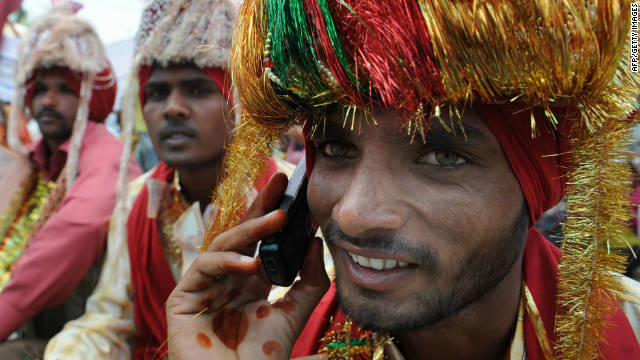
An Indian talks on his mobile phone during a mass marriage ceremony for some 525 poverty-stricken couples from the India-Pakistan border area on April 13, 2009.
"Now mobile phone ownership is perhaps 30% of households and cell phone coverage is widespread," said Sachs, director of the United Nations Millennium Villages Project, which focuses on improving 14 rural villages across 10 African countries as a model for wider prosperity in the region.
The advent of the mobile society may have brought convenience and a cultural sea change to the U.S. and Europe, but in the poorest regions of the world, affordable mobile phone access has caused a quantum leap in services -- like calling for medical help, sending a quick letter to loved ones or starting a savings account -- that Americans and Europeans have taken for granted for generations, analysts say.
A vendor of mobile phones in Lagos, Nigeria, in April 2007. The cost of cell phones have dropped in the past decade, which saw mobile subscriptions grow to 4 billion in the developing world.
"The cell phone is the single most transformative technology for development," said Sachs, head of the Earth Institute at Columbia University and author of the 2005 book "The End of Poverty."
"Poverty is almost equated with isolation in many places of the world. Poverty results from the lack of access to markets, to emergency health services, access to education, the ability to take advantage of government services and so on," Sachs said. "What the mobile phone -- and more generally IT technology -- is ending is that kind of isolation in all its different varieties."

This April 17, 2009 shows an Indian vendor using her mobile phone to take customers orders at a wholesale market on the outskirts of Hyderabad. The simple ability to make a phone call has had far-reaching economic consequences, analysts say.
Moreover, the profusion of payment services via cell phones puts places like Kenya and Uganda in the vanguard of mobile financial services. "You can walk in the middle of rural village in Rwanda and use a mobile phone to pay at a recharging station to recharge LED lights," says Amanda Gardiner, acting program manager of Business Call to Action, a New York-based non-profit organization that is helping to bring more mobile phones to Africa's rural poor.
"I'm always flabbergasted I don't walk into Home Depot and see these services here, just swipe your cell phone and go," Gardiner said. "In some ways, they're really leaping ahead of us and going right to the future."
Bengladeshi refugees from Libya recharge their cellular telephones on March 9 at the Choucha camp in Tunisia near the border with Libya. Kenya's "mobile-money" revolution
From 2005 to 2010, cell phone use tripled in the developing world to nearly 4 billion mobile subscriptions, according to the International Telecommunications Union (ITU). Nowhere was the growth faster than in Africa, which saw mobile use grow more than 400% during that time frame, according to ITU. That means more money -- a 2006 University of Michigan study found that every 10% increase in cell phone penetration grows the local economy by 0.6%.
The simple ability to make a phone call has far-reaching economic consequences, Sachs said.
A disabled beggar looks on as another beggar talks on a mobile phone in a market in Rawalpindi, Pakistan, on November 19, 2008. A 2006 University of Michigan study found that every 10% increase in cell phone penetration grows the local economy by 0.6%."Places where traditionally, people would walk livestock for a week or two without knowing what kind of price they'll fetch -- should they go to Khartoum, Nairobi or Port Saeed? Now they can call ahead and find out where to get the best price," Sachs said.
The low cost of setting up mobile towers and plunging costs of handsets has allowed cell phone coverage to grow even in poor, rural locations, said Michael Joseph, former CEO of Safaricom, a Kenyan telecom provider which grew from 17,000 users when he started in 2000 to more than 18 million when he stepped down in 2010. "There's probably more pervasive coverage in Kenya than in many areas in Europe," Joseph said.
Business models set up for selling services to the poor -- such as buying pre-paid phone service and charging by the second rather than the minute -- made cell phone use affordable, but Safaricom's development of banking services via cell phones revolutionized the telecom business in poor countries.
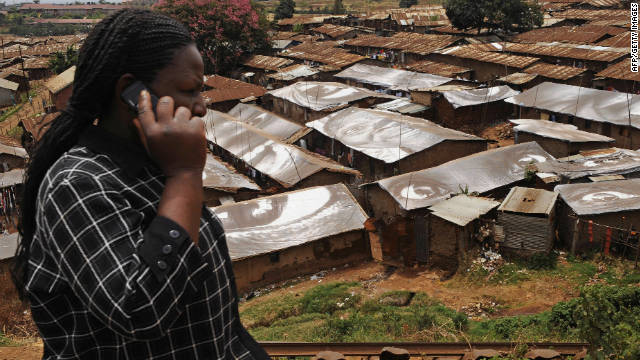
A woman speaks on a mobile phone in front of Kibera, one of the world's largest slums, on February 16, 2009, near Nairobi. Mobile phone growth in Africa has grown more than 400% from 2005 to 2010.Safaricom, in partnership with the U.K.'s Vodafone, started M-PESA (short for mobile pesa, Swahili for "money") services in 2007 that allow customers to digitally transfer cash via mobile phones. Two years later, 10% of the country's GDP was being circulated through M-PESA, according to a 2010 World Bank report. Now Kenyans make $1 billion a month in transactions via M-PESA, where cash can be deposited and transferred at one of 20,000 stores, Joseph said.
"The growth of GDP in Kenya would be half what it was the past 10 years if it wasn't for the mobile phone," said Joseph.
"About 70% of all jobs in Kenya are in the informal sector -- selling goods on the side of the road, that sort of thing -- and now to start a business all you need is a cell phone," said Joseph, who now is a fellow at the World Bank focusing on mobile money services.
As a result of M-PESA, more cash is moving -- and staying -- in smaller villages, building up the local economy, said Olga Morawczynski, who spent 18 months in Kenya studying the impact of mobile banking services there.
"Now that money is being delivered locally, they didn't have to physically go to the nearest urban center to get cash," said Morawczynski, who is now working in Uganda on mobile banking programs for the Grameen Foundation's AppLab program. "I noticed village stores had seen a demand in 'city goods' -- things you wouldn't typically get in the villages before like furniture, or a particular hair-straightening product for women.
Mobile apps for poverty
Cell phone technology has unleashed new ways to help the poor in developing countries, Sachs said, but businesses have led the way.
"Cell phones are spreading almost entirely on a market basis ... only now are we starting to get the applications for it on the social services side," Sachs said. "And the genius of prepaid phone cards has made it possible for the poor to gain access to this technology without government involvement ... it's largely governments stepping out of the way and letting commercial companies come in."

Safaricom's mobile banking model is being brought to areas from Bangladesh to Uganda. The United Nations Development Bank last month announced a program to bring mobile phone service to 3 million more poor people in Africa and South Asia by 2013. Mobile technology is now being used in Gambia to track medication stock levels in rural villages, Gardiner said. For the UN Millennium Project villages, the pre-paid mobile card is now being used as a model for pre-paid electrical service.
"We're able to do very quick mapping and needs assessments with smartphone with GIS capability," said Sachs, project director. "We can cover an area of assessment in weeks, something that used to take years."
"The most powerful thing about cell phones is how it has released money flow incountries that have poor infrastructure and often are in crisis situations," Morawczynski said.
"It also teaches people terms such as 'pin number', 'account', and 'transfer,' these kind of technical foreign terms that serve as a nice transitional toward using financial banking services for the first time. People are realizing it's better than keeping money buried in the ground."

Our future: Empty pockets, except for our phones

Google says the first customer for Google Wallet should be George Costanza from the '90s TV show
Google says the first customer for Google Wallet should be George Costanza from the '90s TV show "Seinfeld."

Here's a Googley vision for the future:

"We definitely hope one day you can walk out of the house with your phone in your hand -- and nothing else," said Marc Freed-Finnegan, the company's product manager for Google Wallet. It aims to digitize everything in your pockets in coming years by collapsing all that paper, plastic and metal into one device: the smartphone.
The idea of using the mobile phone as a credit card, driver's license, transit pass, digital coupon collector, house key, hotel key, corporate ID and more probably sounds pretty sci-fi-futurey. But it's almost practical when you consider the history of the smartphone.
Since the Apple iPhone debuted in 2007 (it's considered by most tech analysts to be the first true smartphone, running apps and functioning as a pocket computer), technologists have been cramming ever more functionality into these Swiss Army Knife-like gadgets.
Our phones have replaced many other once-common tools, from GPS devices (remember those?) to handheld gaming consoles, point-and-shoot cameras, calendars, notebooks, newspapers and portable music players.
Now they're conquering new territory, most notably the wallet.
From there, who knows? Analysts expect phones to get so smart that they could delay your alarm clock if an airline delays your morning flight. Apple's new "humble personal assistant," named Siri, is a step in that direction. And technologists are working on phone prototypes that could be built into clothing, could project their screens on your skin or, in the way-off future, would have flexible and stretchable screens.
"Mobile phones are definitely becoming a center of all of our lives, I think," Freed-Finnegan said. "When you're carrying around this small computer, you can do all kinds of things with it."
The phone-as-wallet trend started in South Korea and Japan about five years ago, and it's been talked about in the U.S. for some time. But it only became a reality September 19, when the Google Wallet app went public for Nexus S smartphones on Sprint's network. That's a relatively small subset of people (Google wouldn't say how many), but the company says it's just an early implementation of what's to come.
Here's how it works at checkout:
Instead of pulling out a credit card to pay for your purchase, you get out your phone. Then you tap it on an NFC reader (these are becoming more common in stores and are usually labeled "PayPass" along with a little radio-wave icon) to log the payment. You have to enter a PIN for security.
Google Wallet currently works only with Citi MasterCard. Google also has a prepaid card of its own that you can load up with money from a bank or credit card account.
Some reviewers say the service is clunky.
"Other forms of payment are easier and quicker," said Jeff Blyskal, a senior editor at Consumer Reports, who tested Google Wallet in San Francisco.
"I don't think the Google wallet or any of these digital wallets are going to replace your leather wallet," he said. "I just don't think it will happen."
The phone-wallet technology is promising and probably will be a significant part of the mobile future, but it has to get easier to use, said Will Stofega, director of mobile device technology and trends at IDC, an analyst firm.
"I think the phone as wallet is a good place to start, and one of the things that has to happen is it has to be easy ... and it has to be accepted all over," he said.
Google says Google Wallet will continue to develop. The company hopes that, at some point, this smartphone app will carry loyalty cards and digital coupons so someone could just tap their phone and, all at once, also get discounts from a grocery store loyalty program or spend a Groupon deal they had in the queue.
In the longer term, the company and others hope to jam the rest of the contents of your pockets -- identification cards, transit passes, keys and the like -- into your phone, too. The details are far from worked out, but a phone with an NFC chip could be used to unlock doors and to identify a person. (Here's one reason Google Wallet isn't all that popular yet; only a handful of smartphones in the U.S. have such a chip in them, including the Google Nexus S and two BlackBerry models, which don't work with Google Wallet.)
For a hotel key, a clerk could transfer a key permission to the guest's phone upon check-in. Then the phone would communicate with a door lock in the same way it would with a cashier: by passing identifying information back and forth and unlocking the door.
Lots of hardware and industry standards might need to be changed to make something like that happen. And there will probably be security issues as well.
Even more complicated would be the phone-based drivers' license, since state governments would need to approve that. Google said there would obviously also have to be some form of authentication technology employed so the digital license couldn't be faked. That's a long way out, Freed-Finnegan said.
But the company thinks the digital wallet is a smart place to begin.
"We're really just getting started," he said.

Saturday, 8 October 2011

Hedge Funds Are Betting Against Hungary

French and Belgian bank stocks have crashed and the bond yields of Greece, Italy and Portugal may be peaking. Now hedge funds and bond vigilantes have begun to zero in on Hungary as the fashionable European country to bet against.
One of the first countries to get bailed out by the International Monetary Fund in the early days of the financial crisis, Hungary has undergone a severe retrenchment since then with banks, consumers and the government cutting back drastically. Now, after a brief export-driven growth spurt, Hungary, like the rest of Europe, could well be headed for a second recession.
As with Greece, Spain and Italy, the Hungarian government and its large banks have been reliant on foreign investors for their borrowing needs and, as a result, the country’s foreign currency debt burden of 110 percent of gross domestic product is one of the highest in the world.

Crucially, the government sells 50 percent of its debt to foreign investors, and as worries build over the weakening of the forint and drastic antibank measures taken by the government, the bears are betting that Hungary will suffer the same foreign investor strike that led to bailouts for Greece, Ireland and Portugal.
Which may have been why Hungary’s embattled Central Bank governor, Andras Simor — who survived a concerted attempt by the prime minister, Viktor Orban, to fire him last year — made a quick visit to London this week to take the temperature of Hungary’s jittery bond holders.
Mr. Simor is fully aware that in the current risk-averse market, investors who were eager last year to hold higher-yielding Hungarian debt may no longer be willing to do so — especially in light of the controversial actions taken by the government to tax banks and, as he puts it, to “quasi-nationalize” the pension system.
“Any policy maker who says he is not concerned would be crazy,” Mr. Simor said on Thursday, referring to the recent flight to safety by emerging markets investors. “This affects countries with large amounts of debt. But I think that if investors look not at the short term but the medium term they will see that this a country that pays a reasonable rate of interest and has a reasonable budget deficit — and I think they will make the right calculation.”
Investors may well be looking to the medium term — but not in the way Mr. Simor would want them.
By purchasing credit-default swaps, which have more than doubled in the last three months, and making bets that the country’s banks and bonds have further to fall, some hedge funds are taking the view that money is going to keep fleeing the country, forcing Mr. Simor to keep rates even higher to defend his currency. Since July, the forint has weakened in value against the euro to 296, from 264 — perhaps the clearest sign that investors are losing confidence in Hungary.
Hungary has also suffered from the strong Swiss franc as loans in this currency, particularly in the mortgage market, are 20 percent of G.D.P.
While Mr. Simor was critical of some of the government’s more unconventional measures, he argued that the economy was in much better shape than it was two years ago, with a target budget deficit of just 2 percent of G.D.P. for 2012.
Because Hungary is not a member of the euro zone, a crisis would not have the systemic effect of a Greek collapse. But with the resources of the International Monetary Fund now focused on greater Europe, a Hungarian rescue operation would come at a bad time — especially as relations between the fund and the current government are strained. It is also true that large banks in Italy and Austria have significant operations in Hungary.

Where are cell phones most popular?

China's two special administration regions -- Macau and Hong Kong -- have more cell phone subscriptions per capita than anywhere else in the world.
For every 100 people in Macau, there are 206.43 cell phone subscriptions, according to recent statistics from the International Telecommunications Union. Hong Kong is second with 190.21 subscriptions for every 100 people.
China, the world's most populous nation, has the most cell phone subscriptions in the world: just more than 859 million. But there are only 64.04 subscriptions per 100 people, ranking it 150th on the list above.
The United States ranks 114th, with 89.86 subscriptions per 100 people.
At the bottom of the list is Myanmar, where there are only 1.24 subscriptions for every 100 people. North Korea is second from bottom with 1.77. Most of the bottom 25 consists of poor African countries.
Joining Macau and Hong Kong in the top five are Saudi Arabia, Montenegro and Panama.
Oil-rich countries are well-represented in the top 20, with Saudi Arabia joining Libya (9), Russia (11), Oman (12), Kuwait (14) and the United Arab Emirates (20).

Tuesday, 4 October 2011

Agent Orange and Vietnam War


Agent Orange is the code name for one of the herbicides and defoliants used by the U.S. military as part of its herbicidal warfare program, Operation Ranch Hand, during the Vietnam War from 1961 to 1971. Vietnam estimates 400,000 people being killed or maimed, and 500,000 children born with birth defects.
A 50:50 mixture of 2,4,5-T and 2,4-D, it was manufactured for the U.S. Department of Defense primarily by Monsanto Corporation and Dow Chemical. The2,4,5-T used to produce Agent Orange was later discovered to be contaminated with 2,3,7,8-tetrachlorodibenzodioxin, an extremely toxic dioxin compound. It was given its name from the color of the orange-striped 55 US gallon (200 L) barrels in which it was shipped, and was by far the most widely used of the so-called "Rainbow Herbicides".
During the Vietnam War, between 1962 and 1971, the United States military sprayed nearly 20,000,000 US gallons (75,700,000 L) of chemical herbicides and defoliants in Vietnam, eastern Laos and parts of Cambodia, as part of Operation Ranch Hand. The program's goal was to defoliate forested and rural land, depriving guerrillas of cover; another goal was to induce forced draft urbanization, destroying the ability of peasants to support themselves in the countryside, and forcing them to flee to the U.S. dominated cities, thus depriving the guerrillas of their rural support base and food supply.
The US began to target food crops in October 1962, primarily using Agent Blue. In 1965, 42 percent of all herbicide spraying was dedicated to food crops.Rural-to-urban migration rates dramatically increased in South Vietnam, as peasants escaped the destruction and famine in the countryside by fleeing to the U.S.-dominated cities. The urban population in South Vietnam nearly tripled: from 2.8 million people in 1958, to 8 million by 1971. The rapid flow of people led to a fast-paced and uncontrolled urbanization; an estimated 1.5 million people were living in Saigon slums, while many South Vietnamese elites and U.S. personnel lived in luxury.
United States Air Force records show that at least 6,542 spraying missions took place over the course of Operation Ranch Hand. By 1971, 12 percent of the total area of South Vietnam had been sprayed with defoliating chemicals, at an average concentration of 13 times the recommended USDA application rate for domestic use. In South Vietnam alone, an estimated 10 million hectares of agricultural land were ultimately destroyed. In some areas TCDD concentrations in soil and water were hundreds of times greater than the levels considered "safe" by the U.S. Environmental Protection Agency. Overall, more than 20% of South Vietnam's forests were sprayed at least once over a nine year period.

Use in the Vietnam War


Map showing locations of U.S. army aerial herbicide spray missions in South Vietnam taking place from 1965 to 1971
During the Vietnam War, between 1962 and 1971, the United States military sprayed nearly 20,000,000 US gallons (75,700,000 L) of chemical herbicides and defoliants in Vietnam, eastern Laos and parts of Cambodia, as part of the aerial defoliation program known as Operation Ranch Hand. The goal was to defoliate rural/forested land, depriving guerrillas of food and cover and clearing in sensitive areas such as around base perimeters. The program was also a part of a general policy of forced draft urbanization, which aimed to destroy the ability of peasants to support themselves in the countryside, forcing them to flee to the U.S. dominated cities, depriving the guerrillas of their rural support base.
Spraying was usually done either from helicopters or from low-flying C-123 Provider aircraft, fitted with sprayers and "MC-1 Hourglass" pump systems and 1,000 US gal (3,800 L) chemical tanks. Spray runs were also conducted from trucks, boats, and backpack sprayers.
The first batch of herbicides was unloaded at Tan Son Nhut Air base in South Vietnam, on January 9, 1962. Air Force records show at least 6,542 spraying missions took place over the course of Operation Ranch Hand. By 1971, 12 percent of the total area of South Vietnam had been sprayed with defoliating chemicals, at an average concentration of 13 times the recommended USDA application rate for domestic use. In South Vietnam alone, an estimated 10 millionhectares of agricultural land were ultimately destroyed. In some areas, TCDD concentrations in soil and water were hundreds of times greater than the levels considered safe by the U.S. Environmental Protection Agency.
The campaign destroyed 5 million acres (20,000 km2) of upland and mangrove forests and millions of acres of crops. Overall, more than 20% of South Vietnam's forests were sprayed at least once over a nine year period.
In 1965, members of the U.S. Congress were told "crop destruction is understood to be the more important purpose ... but the emphasis is usually given to the jungle defoliation in public mention of the program." Soldiers were told they were destroying crops because they were going to be used to feed guerrillas. They later discovered nearly all of the food they had been destroying was not being produced for guerrillas; it was, in reality, only being grown to support the local civilian population. For example, in Quang Ngai province, 85% of the crop lands were scheduled to be destroyed in 1970 alone. Widespread famine occurred as a result, leaving hundreds of thousands of people malnourished or starving.
The U.S. military began targeting food crops in October 1962, primarily using Agent Blue; the American public was not made aware of the crop destruction programs until 1965 (and it was then believed that crop spraying had begun that spring). In 1965, 42 percent of all herbicide spraying was dedicated to food crops. The first official acknowledgement of the programs came from the State Department in March 1966.
Many experts at the time, including Arthur Galston, the biologist who developed and intensively studied TCDD, opposed herbicidal warfare, due to concerns about the side effects to humans and the environment by indiscriminately spraying the chemical over a wide area. As early as 1966, resolutions were introduced to the United Nations charging that the U.S. was violating the 1925 Geneva Protocol, which regulated the use of chemical and biological weapons.

Effects on the Vietnamese people

Health effects


Major Tự Đức Phang was exposed to dioxin-contaminated Agent Orange
The Vietnam Red Cross reported as many as 3 million Vietnamese people have been affected by Agent Orange, including at least 150,000 children born with birth defects. According to Vietnamese Ministry of Foreign Affairs, 4.8 million Vietnamese people were exposed to Agent Orange, resulting in 400,000 people being killed or maimed, and 500,000 children born with birth defects.
Children in the areas where Agent Orange was used have been affected and have multiple health problems, including cleft palate, mental disabilities, hernias, and extra fingers and toes. In the 1970s, high levels of dioxin were found in the breast milk of South Vietnamese women, and in the blood of U.S. soldiers who had served in Vietnam. The most affected zones are the mountainous area along Truong Son (Long Mountains) and the border between Vietnam and Cambodia. The affected residents are living in substandard conditions with many genetic diseases.

Vietnamese babies, deformed and stillborn after prenatal dioxin exposure from Agent Orange
About 28 of the former US military bases in Vietnam where the herbicides were stored and loaded onto airplanes may still have high level of dioxins in the soil, posing a health threat to the surrounding communities. Extensive testing for dioxin contamination has been conducted at the former US airbases in Da Nang, Phu Cat and Bien Hoa. Some of the soil and sediment on the bases have extremely high levels of dioxin requiring remediation. The Da Nang Airbase has dioxin contamination up to 350 times higher than international recommendations for action. The contaminated soil and sediment continue to affect the citizens of Vietnam, poisoning their food chain and causing illnesses, serious skin diseases and a variety of cancers in the lungs, larynx, and prostate.

Ecological effects

About 17.8% (3,100,000 ha) of the total forested area of Vietnam was sprayed during the war, which dramatically disrupted ecological equilibrium. Furthermore, the persistent nature of dioxins, erosion caused by loss of protective tree cover, and loss of seeding forest stock, meant reforestation was difficult or impossible in many areas. Many defoliated forest areas were quickly invaded by aggressive pioneer species, such as bamboo and cogon grass, which make it unlikely the forests will be able to regenerate. Animal species diversity was also significantly impacted: in one study, a Harvard biologist found 24 species of birds and 5 species of mammals in a sprayed forest, while in two adjacent sections of unsprayed forest there were 145 and 170 species of birds and 30 and 55 species of mammals.
Dioxins from Agent Orange have persisted in the Vietnamese environment since the war, settling in the soil and sediment and entering into food chain through the animals and fish that feed in the contaminated areas. Movement of dioxins through the food web has resulted in bioconcentration and biomagnification. The areas most heavily contaminated with dioxins are the sites of former U.S. air bases.

Sociopolitical effects

The RAND Corporation's Memorandum 5446-ISA/ARPA states: "the fact that the VC obtain most of their food from the neutral rural population dictates the destruction of civilian crops ... if they (the VC) are to be hampered by the crop destruction program, it will be necessary to destroy large portions of the rural economy – probably 50% or more".
Rural-to-urban migration rates dramatically increased in South Vietnam, as peasants escaped the destruction in the countryside by fleeing to the U.S.-dominated cities. The urban population in South Vietnam more than tripled: from 2.8 million people in 1958, to 8 million by 1971. The rapid flow of people led to a fast-paced and uncontrolled urbanization; an estimated 1.5 million people were living in Saigon slums, while many South Vietnamese elites and U.S. personnel lived in luxury.

Effects on U.S. veterans

Studies of veterans who served in the South during the war have increased rates of cancer, nerve, digestive, skin and respiratory disorders. Veterans from the south had higher rates of throat cancer, acute/chronic leukemia, Hodgkin's lymphoma and non-Hodgkin's lymphoma, prostate cancer, lung cancer, soft tissue sarcoma and liver cancer. Other than liver cancer, these are the same conditions the US Veteran's Administration has found to be associated with exposure to Agent Orange/dioxin, and are on the list of conditions eligible for compensation and treatment.
Military personnel who loaded airplanes and helicopters used in Ranch Hand probably sustained some of the heaviest exposures. Members of the Army Chemical Corps, who stored and mixed herbicides and defoliated the perimeters of military bases, are also thought to have had some of the heaviest exposures. Others with potentially heavy exposures included members of U.S. Army Special Forces units who defoliated remote campsites, and members of U.S. Navy river units who cleared base perimeters. Military members who served on Okinawa also claim to have been exposed to the chemical.
While in Vietnam, the veterans were told not to worry, and were persuaded the chemical was harmless. After returning home, Vietnam veterans began to suspect their ill health or the instances of their wives having miscarriages or children born with birth defects may be related to Agent Orange and the other toxic herbicides to which they were exposed in Vietnam. Veterans began to file claims in 1977 to the Department of Veterans Affairs for disability payments for health care for conditions they believed were associated with exposure to Agent Orange, or more specifically, dioxin, but their claims were denied unless they could prove the condition began when they were in the service or within one year of their discharge.
By April 1993, the Department of Veterans Affairs had only compensated 486 victims, although it had received disability claims from 39,419 soldiers who had been exposed to Agent Orange while serving in Vietnam.

Further reading

Books

  • (in French) L'agent orange au Viet-nam: Crime d'hier, tragédie d'aujourd'hui. Tiresias editions. 2005. ISBN 2-91523-23-6.
  • Cecil, Paul Frederick (1986). Herbicidal warfare: the Ranch Hand Project in Vietnam. Praeger. ISBN 9780275920074.
  • Đại, Lê Cao (2000). Agent Orange in the Vietnam War: History and Consequences. Vietnam Red Cross Society.
  • Gibbs, Lois Marie (1995). "Agent Orange and Vietnam Veterans"Dying From DioxinsSouth End Press. pp. 14–20. ISBN 9780896085251.
  • Griffiths, Philip Jones (2004). Agent Orange: Collateral Damage in Vietnam. Alpen Editions. ISBN 978-1904563051.
  • Linedecker, Clifford; Ryan, Michael; Ryan, Maureen (1982). Kerry: Agent Orange and an American Family (1st ed.). St. Martins Press. ISBN 978-0312451127.
  • Schecter, Arnold (1994). Dioxins and health. Springer. ISBN 9780306447853.
  • Uhl, Michael; Ensign, Tod (1980). GI Guinea Pigs: How the Pentagon Exposed Our Troops to Dangers Deadlier than War (1st ed.). Playboy Press. ISBN 978-0872235694.
  • Zierler, David (2011). The Invention of Ecocide. University of Georgia Press. ISBN 9780820338279.
  • Wilcox, Fred (2011). Scorched Earth: Legacies of Chemical Warfare in VietnamSeven Stories PressISBN 978-1-60980-138-0.
  • Wilcox, Fred (2011). Waiting for an Army to Die: The Tragedy of Agent OrangeSeven Stories PressISBN 978-1-60980-136-6.

Journal articles / Papers

  • Weisman, Joan Murray. The Effects of Exposure to Agent Orange on the Intellectual Functioning, Academic Achievement, Visual Motor Skill, and Activity Level of the Offspring of Vietnam War Veterans. Doctoral thesis. Hofstra University. 1986.
  • Kuehn, Bridget M.; Agent Orange Effects, Journal of the American Medical Association, 2010;303(8):722.

Government/NGO reports


News


External links

Monday, 3 October 2011

Scientist dies days before Nobel honour


A scientist who won the Nobel prize for medicine for his work on cancer, died of the disease just days before he could be told of the award.
Calling it "bittersweet" news, colleagues of Canadian-born Ralph Steinman at New York's Rockefeller University said on Monday he had prolonged his own life with a new therapy based on his prize-winning research into the body's immune system.
The 68-year-old physician, who joked last week with his family about hanging on until the annual prize declaration, died on Friday after a four-year battle with pancreatic cancer.
The Nobel committee was not told about his death until hours after it announced the 2011 award, to be shared by Steinman and two other scientists, Bruce Beutler of the US and Jules Hoffman from France whose work on the immune system has also driven ground-breaking possibilities for curbing infections and cancers.
He never knew his life's work had been crowned with the highest accolade science can bestow, becoming the first person in half a century to win a posthumous Nobel prize.
"We said to him, 'Hang on until Monday,'" Alexis Steinman, his daughter, said. "We joked, we said, 'You know you got to keep going until the Nobel.'"
Admitted to hospital last Sunday, he lost consciousness on Thursday and died surrounded by family the following day.
But Marc Tessier-Lavigne, Rockefeller University president, said his staff only heard of his death from the family about half an hour after news of the Nobel prize came out from Sweden.
'Great scientist'
Goran Hansson, the Nobel Committee secretary general, told Reuters: "I am, of course, saddened that Dr Steinman could not receive this news and feel that happiness."
"He was a great scientist."
The Nobel Committee spent the morning calling Steinman to offer the traditional congratulations only to discover they faced a "unique" situation.
After consultations on the fate of the prize, and money worth three quarters of a million dollars, they decided it would go to Steinman's heirs.
"The Nobel Prize shall not deliberately be awarded posthumously. However, the decision to award the Nobel Prize to Ralph Steinman was made in good faith, based on the assumption that the Nobel laureate was alive," the committee said.
His university said: "Steinman ... was diagnosed with pancreatic cancer four years ago, and his life was extended using a dendritic-cell based immunotherapy of his own design."
Steinman, whose research contributed to the launch last year of the first approved vaccine to kill tumours, was working until his final days, colleagues said.
Beutler and Hoffmann, studied the first stages of the body's immune responses in the 1990s.
Beutler, 53, is based at the Scripps Research Institute in La Jolla, California. Luxembourg-born Hoffmann, 70, conducted much of his work in Strasbourg.

Eurozone leaders rule out Greek debt default


A senior European official has said eurozone members are not pushing to allow Greece to default as had been rumoured.
Jean-Claude Juncker, prime minister of Luxembourg, also said early on Tuesday that there was no suggestion that Greece would leave the eurozone.
Greece's sovereign debt crisis has threatened the union of 17 nations who use the euro, and there have been occasional calls that letting Athens default is the only way to move past the crisis.
But Juncker emphatically denied that was a possibility after a meeting on how to save Greece.
The finance ministers did not decide whether Greece would get the next installment of its bailout loans. But they did clinch a deal on a Finnish demand for collateral before it would agree to a second bailout for Greece.
Juncker said the currency partners had asked the Greek government to make further savings in 2012 and 2013 to secure EU and IMF approval at a special eurozone meeting called for October 13, leading to a "definite and final decision in the course of October", because Greece said it does not need 8bn euros in blocked loans until November.
Nevertheless, global stocks fell to a 15-month low on Tuesday, and Asian stocks near a 16-month low, as investors shed riskier assets.
Japan's Nikkei fell to a 6-1/2 month low as a sell-off in commodities pushed trading houses lower. MSCI's broadest index of Asia Pacific shares outside Japan fell 1.58 per cent, hovering near a 16-month low hit in late September. It fell about 3.6 per cent on Monday.
The MSCI All-Country World index fell 0.52 per cent to its lowest level since July 2010.
This added to declines on Monday when bank shares were battered, with Dexia, the Franco-Belgian financial group, calling an emergency board meeting after concerns about its exposure to Greece.
Difficult time
Al Jazeera's Jacky Rowland, reporting from Luxembourg earlier, said Greece would have a difficult time convincing finance ministers to continue with the bailout.
"The question that the European finance ministers are asking themselves is whether Greece is a basket case," she said.

"The Greeks themselves would say no. Their finance minister, who is in Luxembourg, said 'yes, Greece has structural problems, but Greece is not the scapegoat of the Eurozone'.
"The problem is it is difficult to convince other minsiters of that when just 24 hours earlier you have admitted that you have missed your deficit target for 2011, and that 2012 is not looking good either."
The summit came as Greece's government moved to present a fresh package of budget cuts to parliament amid growing concern that the country stands on the brink of a financial collapse which could endanger the entire global economy.
The government has already said that it will miss deficit-reduction targets set by the European Union and the International Monetary Fund as a condition of bailout payments necessary to keep the Greek economy afloat, prompting stock market alarm.
Without access to the $150bn bailout fund, paid for by other eurozone countries and the IMF, analysts say Greece could run out of funds by mid-October.
Analysts fear any default on Greek debt could pitch the fragile global economy into a fresh recession.
'Slide into bankruptcy'
Manoj Ladwa, a senior economical analyst, told Al Jazeera there was a strong possibility Greece could slide into bankruptcy at some point. That would prompt an assessment of the future of the eurozone, he said.
Athens is labouring under 350 billion euros or more of debt, with its stripped-bare economy already on its knees.
The revelation that Greece is finding it increasingly difficult to reduce its borrowings in spite of all its austerity measures has raised concerns that its international creditors could effectively pull the plug.
On Sunday, Greece's finance ministry said the deficit this year would probably be 8.5 percent of gross domestic product, higher than the 7.8 percent previously anticipated.
The ministry blamed a deeper-than-expected recession for the failure to meet the target, with the economy contracting by 5.5 percent instead of the 3.8 percent estimate made in May.
The announcement prompted widespread selling in stock markets on Monday, as benchmark indexes in London, Paris and Frankfurt were down by about two per cent in morning trading, raising further concerns over the stability of the eurozone.
But international pressure on Greece to impose the austerity measures demanded by its creditors has provoked many in the country to protest.
Criticism
Ericos Finalis, a member of the anti-austerity "Won't pay movement", criticised the government's stance.
"There is a programme of social destruction in Greece," he told Al Jazeera. "One out of four Greeks will be out of a job pretty soon.
"The entire social structure of Greece has been destroyed ... the people can't afford to pay these different taxes, families are facing huge problems."
The Greek government's latest measures to cut costs include plans to suspend 28,000 public sector employees on reduced pay by the end of 2011.
The programme falls short of the 30,000 reduction demanded by Greece's creditors and offers many the prospect of early retirement on a full pension.
Those affected would be paid a fraction of their actual salary for a period of one to two years, but would be able, at the same time, to hold jobs in the private sector, if they can find them.
The cabinet has also committed itself to reducing civil service jobs by 150,000 within four years.